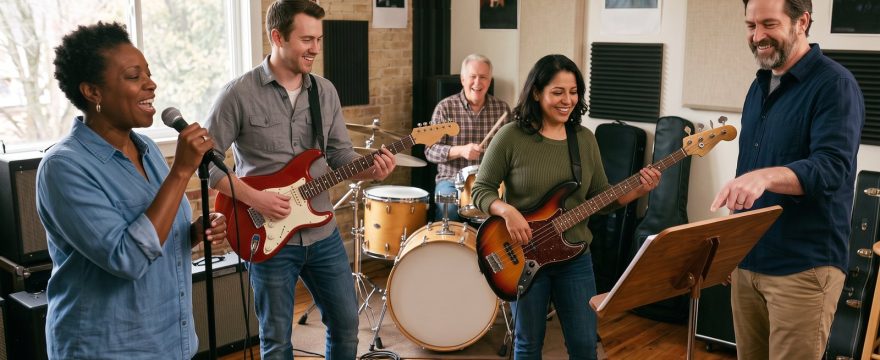
It is one of the most common New Year’s resolutions, and one of the most quietly abandoned: “This is the year I finally learn to play.” Many adults never start because of one worry. Isn’t it too late?
It isn’t. Adults start piano, guitar, voice, drums and violin every week, including plenty of people in their 40s, 60s and beyond. Here is what learning as an adult actually looks like.
Adults have real advantages
Children have more free time and fewer worries about sounding silly. But adults bring strengths that kids don’t have:
- You chose this. Motivation that comes from you lasts longer than motivation that comes from a parent.
- You understand how to practice. Adults can follow a plan, notice what isn’t working and adjust.
- You know what you want to play. A clear goal, like a favorite song, makes every step feel meaningful.
- You’ve been listening to music your whole life. Your ear is better trained than you think.
What to expect in the first few months
Progress depends on the instrument and on regular practice, but most adult beginners can expect something like this:
- First few weeks: getting comfortable holding the instrument, the first notes or chords, simple rhythms. Fingers may feel clumsy. That is normal.
- Two to three months: simple songs start to come together. On guitar, switching between a handful of chords; on piano, hands working together on easy pieces.
- Six months: a small repertoire of songs you can play for friends and family, and the skills to keep learning new ones.
The biggest difference between adults who keep going and adults who quit is not talent. It is steady, small amounts of practice.
How much should an adult practice?
Fifteen to twenty minutes a day beats one long session on the weekend. Short daily practice keeps what you learned fresh and builds the small muscle habits every instrument needs. If daily isn’t realistic, aim for five days a week. Keep the instrument out of its case, where you can see it; it makes picking it up much easier.
Choosing an instrument as an adult
- Piano is a great all-around choice: it is easy to make a nice sound right away, and it teaches how music fits together.
- Guitar lets you play along with songs you already love within weeks.
- Voice needs no instrument to buy, and lessons help you sing with more confidence and less strain.
- Drums are a fantastic stress reliever and build rhythm quickly.
The right instrument is the one you will look forward to playing. If you are torn, start with the music you listen to most.
Set a goal you care about
“Learn piano” is a big, vague goal. “Play my favorite song at my sister’s birthday in June” is a goal you can work toward. Pick one or two specific songs or skills and share them with your teacher. A good teacher will build your lessons around them, so every practice session moves you closer to music you actually want to play.
Why lessons help adults so much
Adults often try to teach themselves with videos first, and many get stuck. Videos can’t see your hands. A teacher spots the small habits, like tension in the wrist, a rushed rhythm or a strained high note, that slow you down or cause discomfort, and fixes them before they become permanent. Lessons also give you a weekly plan and someone who notices your progress, which keeps you going through the slow weeks every learner has.
Common worries, honestly answered
“I don’t have time.” Fifteen minutes a day is enough to make steady progress.
“I’ll be the oldest student there.” Private lessons are one-on-one, at your pace, and adults are a regular part of every music school’s schedule.
“I’m not musical.” Musical skill is learned, not inherited. Teachers see people who “can’t carry a tune” improve all the time.
“Do I have to play in a recital?” No. Recitals are optional. Some adults love them; many never do one.
Start this January
Brighton Music Academy offers private lessons for adults in piano, guitar, voice, drums, violin and more, with teachers who enjoy working with adult beginners. Explore our music lessons, book your first lesson, or call or text (810) 775-3476.