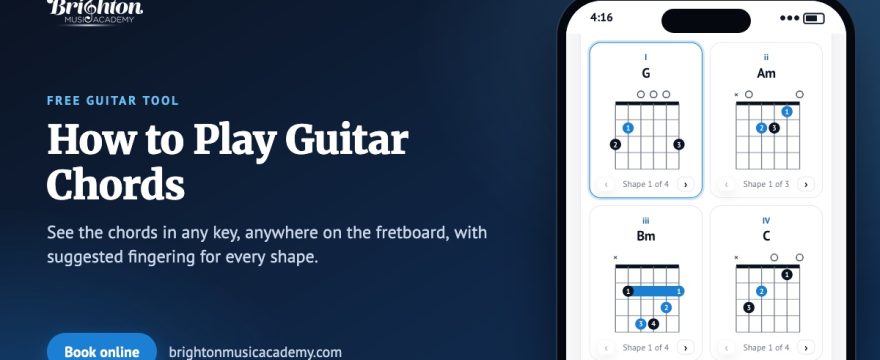
Learning guitar chords is one of the first steps for any beginner. Once you know a few shapes, you can start playing real songs. Use the Chord Finder below to see the common chords in any key, in any area of the fretboard, with suggested fingers for every shape.
Free guitar tool
Guitar Chord Finder
Pick a key and an area of the neck to see which chords you can play there, and how to finger them.
Tap anywhere on the neck to move the 4-fret window there.
Chords in G major
On the neck
Numbers are suggested fingers: 1 index, 2 middle, 3 ring, 4 pinky. A bar means one finger presses several strings (a barre). Tap a chord diagram to hear it.
5 chords to start with
These five open chords show up in thousands of songs. Learn them first, in this order. Tap any one to hear it.
A step-by-step guide for beginners
Forming chord shapes can feel awkward, even uncomfortable, at first. Add switching between chords and it’s no surprise many beginners get discouraged. With the right approach, anyone can learn to play chords cleanly. The key is to split your practice into two parts: chord accuracy and chord transitions.
Step 1: Practice chords slowly and accurately
Aim for clean, clear shapes. Work on one chord at a time, with each finger curled and pressing with its fingertip. Then pick each string one at a time to check it rings. If a string is muted or buzzing, adjust until it sounds clearly. Spend about 10 minutes a day on two or three chords. It won’t be perfect right away, but your hands are learning even between practice sessions.
Step 2: Practice transitions, even if they’re messy
Once the shapes feel familiar, start switching. Choose two or three chords and set a slow, steady tempo, about 60 beats per minute. Strum each chord four times, then switch without stopping to reset your fingers. Keep strumming even if a finger lands in the wrong spot. This builds timing and coordination, and accuracy follows.
Step 3: Combine both
Slow shape practice and steady transition practice work together. If your transitions fall apart, go back to slow shapes for a while. Progress comes from consistent, smart practice, not perfection.
Tips for learning chords faster
- Keep your fingers close to the fretboard when you switch.
- Practice switching between just two chords at a time.
- Practice a little every day. Even 10 to 15 minutes makes a difference.
- Once open chords feel good, use the Chord Finder to try the same chords higher up the neck.
Want help learning guitar faster?
Private lessons help you get past the early frustration and build real consistency. We offer beginner-friendly guitar lessons in Brighton for all ages.