Parents ask this all the time.
Not just “What age should my child start?” — but:
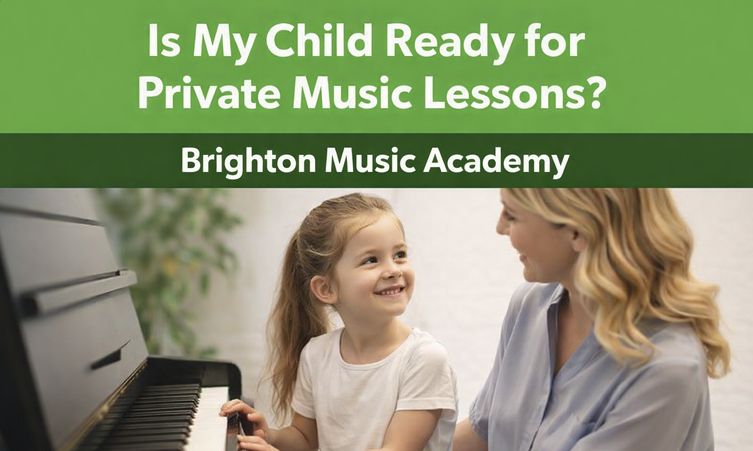
Is my child actually ready for private music lessons?
At Brighton Music Academy, we’ve learned that readiness is less about age and more about maturity, curiosity, and timing.
Let’s break it down.
Signs Your Child May Be Ready for Private Music Lessons
One of the clearest indicators is simple:
They’re asking for lessons.
When a child shows curiosity — whether it’s about piano, drums, guitar, or voice — that natural interest goes a long way.
Other signs of readiness include:
- Showing curiosity about how instruments work
- Wanting to try songs they hear
- Being able to follow basic instructions
- Sitting and focusing for 20–30 minutes
- Enjoying “showing” what they’ve learned
Curiosity is often more important than skill at the beginning.
Enroll NowSigns They May Not Be Ready Yet
On the other hand, there are moments when it may be better to wait.
If a child consistently has meltdowns, refuses to participate, or reacts with strong emotional resistance, it may not be the right time.
That doesn’t mean they’ll never be ready.
Maturity develops at different rates. A child who isn’t ready today may thrive six months from now.
The goal is not to create a negative association that turns them off to music long term.
Is Readiness About Age?
Age matters — but maturity matters more.
As a general guideline, around age 5 is a safe starting point for piano. Piano is often easier for early success because:
- It’s a stationary instrument
- You press a key and immediately get a clear sound
- It doesn’t require holding, bowing, or complex breath control
String and wind instruments often require more physical coordination and patience.
That said, some 4-year-olds are ready — and some 6-year-olds aren’t. It depends on the child.
Should Parents Push a Little?
This is an important one.
We’ve heard countless adults say:
“I wish my parents had kept me in lessons so I could play now.”
Sometimes kids need a gentle push. Not force — but encouragement.
Learning music is a real skill. It takes time. It isn’t instant entertainment.
If a child quits the moment something feels challenging, they may miss out on long-term growth. A little structure and encouragement can make a big difference.
What If You’re Not Sure?
We encourage trial lessons.
A trial removes pressure. It gives the child a chance to experience a real lesson without long-term commitment.
One lesson doesn’t determine success — and one rough lesson doesn’t mean failure. Music is a skill that develops gradually.
Can We Stop and Restart Later?
Absolutely.
It’s completely okay to pause and come back later.
What we want to avoid is turning young students off permanently by forcing lessons before they’re emotionally ready.
Music should feel challenging — but also positive.
Early Experiences Matter
Especially in the first few months, lessons should feel encouraging and supportive.
We try to keep early instruction:
- Structured
- Engaging
- Fun
- Appropriate for the child’s maturity level
When students feel successful early, they’re far more likely to continue.
So, Is Your Child Ready?
If they’re curious, asking questions, and able to focus for a short period — they’re probably ready to try.
If they’re resistant or overwhelmed, it may be wise to wait a little.
Every child develops at a different pace.
And when the timing is right, music can become something they carry for life.
If you’re unsure whether your child is ready for private music lessons in Brighton, we’re happy to help you decide.
A short conversation or trial lesson can give you clarity.
Written by Brighton Music Academy
Professional music instruction serving Brighton, MI and surrounding communities.
Learn more about our lesson programs, related articles, and sister music academies below.
Our Sister Music Academies
Related Reading
Popular Private Lesson Programs in Brighton
If you’re wondering what actually happens once you enroll, we’ve put together a guide that walks parents through the experience. Read What Happens During My Child’s First Music Lesson? to learn what to expect on day one.