Once lessons begin, one of the first questions parents ask is:
what should beginners practice first?
It’s a great question—and an important one—because early practice sets the tone for how students feel about music long-term.
At Brighton Music Academy, we aim to make early practice approachable, encouraging, and realistic—especially for beginners.
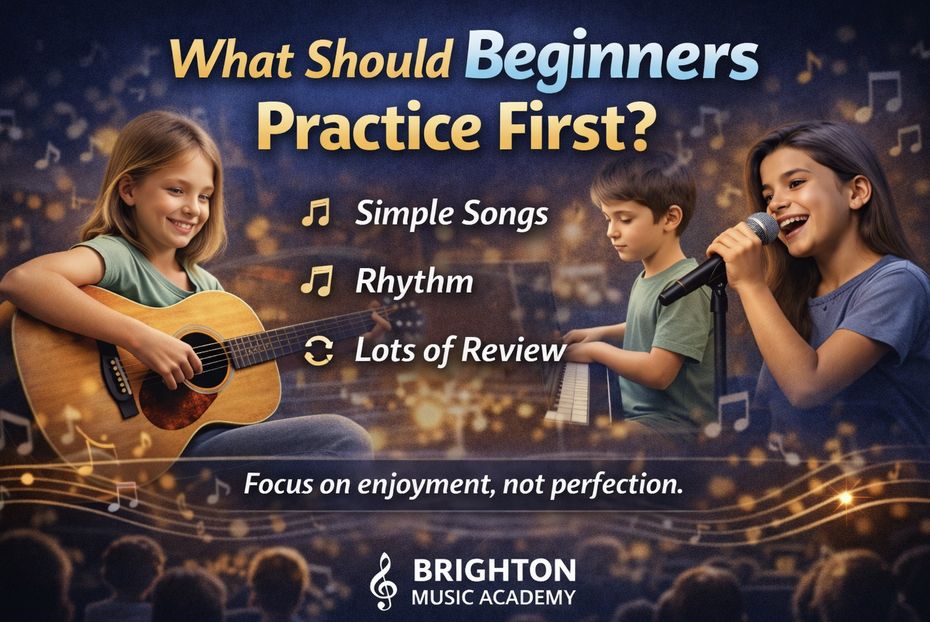
Start with Simple Songs and Rhythm
For most beginners, the easiest and most effective place to start is simple songs and rhythm.
Songs give students something familiar to connect to, and rhythm helps everything else make sense. At the beginning, it’s less about perfect technique and more about engagement and understanding.
If students enjoy what they’re playing, they’re far more likely to return to their instrument on their own.
Early Practice Should Be Mostly Review
In the early stages, practice should focus heavily on review.
Repetition helps new concepts settle in, especially for younger students. That said, if a student starts to feel bored, it’s perfectly fine to change things up a bit. Review doesn’t have to mean doing the exact same thing every time.
The goal is familiarity without frustration.
Practice Doesn’t Need to Sound Good Yet
This part is important: it’s okay if practice doesn’t sound good yet.
Beginners are learning coordination, timing, and basic control. That takes time. Practice is where students experiment, make mistakes, and figure things out.
Giving them space to learn—without constant correction—helps build confidence and curiosity.
Common Practice Mistakes Parents Make
One of the biggest challenges we see isn’t the student—it’s the environment around practice.
Common issues include:
- Being too stern
- Treating practice like schoolwork
- Correcting every mistake
Instead, practice should feel more like a show you want to see. Ask your child to play for you. Let them demonstrate what they’ve learned. Encourage effort, not perfection.
Does Practice Look Different by Instrument?
In many ways, practice is similar across instruments. The fundamentals—listening, repetition, rhythm—apply to piano, guitar, drums, and voice alike.
One helpful difference to note:
For instruments that don’t stay in one place, setting up a dedicated practice space can make a big difference.
A simple setup with:
- A chair
- A music stand
- The instrument always accessible
…makes practice easier to start and more likely to happen.
What Matters Most Early On
At the beginning, practice isn’t about mastering material. It’s about:
- Building comfort with the instrument
- Developing routine
- Creating positive associations
If beginners enjoy the process, progress follows naturally.
So, What Should Beginners Practice First?
In general:
- Start with simple songs and rhythm
- Focus mostly on review
- Change things up if boredom sets in
- Allow practice to sound imperfect
- Keep the environment encouraging
If you’re unsure what your child should be working on at home, your instructor is always the best resource. Enrollment is flexible, and practice expectations can evolve as students grow.
Previous Post: What Age Should Children Start Music Lessons?