
It happens.
At some point, many parents hear:
“I don’t want to do this anymore.”
Before reacting, it helps to understand something important:
Wanting to quit is often a normal phase — not a final decision.
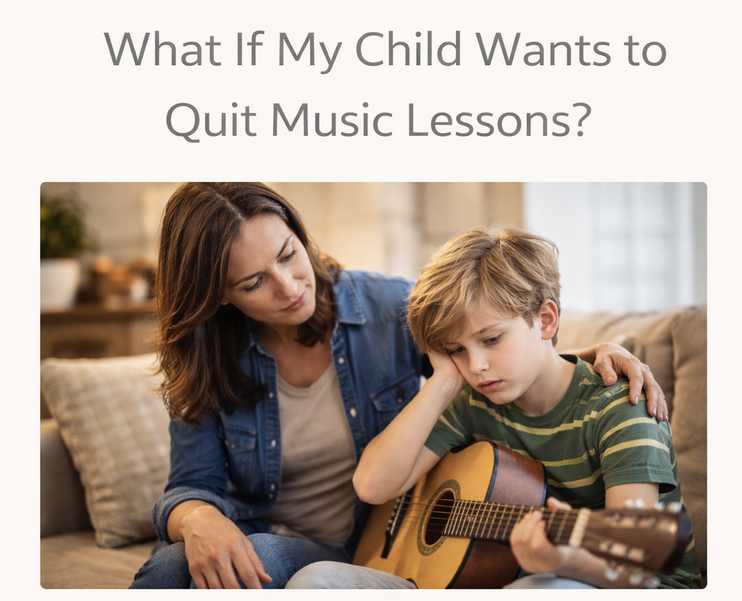
Why Kids Say They Want to Quit
Most of the time, it isn’t about hating music.
It’s usually one of these:
- It’s getting harder.
- They aren’t instantly good at it.
- Practice feels repetitive.
- A new activity seems more exciting.
- They’re frustrated by something small.
Learning an instrument means doing things you’re not good at yet. And for kids, that can feel uncomfortable.
The rare student practices two hours a day without being asked. Most students need time to accept that repetition leads to improvement.
Enroll NowIs This Just a Phase?
Very often, yes.
There’s a big difference between:
- “I don’t feel like practicing.”
- “I’m bored.”
- “I hate this and never want to touch it again.”
Temporary resistance is normal. Especially when something shifts from “new and exciting” to “requires effort.”
Should Parents Push or Let It Go?
This is where maturity comes in.
Children don’t always know what long-term discipline feels like. Many adults say:
“I wish my parents kept me in lessons so I could still play.”
We hear that all the time.
That doesn’t mean force. Forcing rarely works.
But gentle consistency? That works.
Sometimes it’s about adjusting expectations:
- Shorter practice sessions
- New music
- Different goals
- More encouragement
When Is It Okay to Take a Break?
There are times when stepping back makes sense.
If there’s serious defiance, emotional distress, or clear burnout, a short break can reset things.
Music is a real skill. It takes time.
One tough month does not mean failure.
And yes — it’s okay to stop and restart later. We never want early frustration to turn someone off music for life.
Early Success Matters
Private lessons often begin around age 5 for piano because keys allow early success. You press a key, you get a sound.
Other instruments take more coordination early on, which can increase frustration.
That doesn’t mean they’re wrong — just different.
Early experiences should feel positive, even if progress is slow.
What Usually Helps
Instead of quitting immediately, consider:
- Giving it 3–6 months.
- Talking privately with the teacher.
- Changing material.
- Setting a small recital goal.
- Making practice feel less like school and more like sharing.
Confidence builds from skill — not the other way around.
The Bigger Picture
Music isn’t just about talent.
It’s about exposure, patience, and repetition.
Slow starters sometimes finish strong.
If your child truly wants to stop after giving it honest time, that’s a family decision.
But don’t let one difficult season define the whole experience.
Music has a way of coming back later in life.
And when it does, it’s a gift to already know something.
Learn more about getting started, building confidence, and choosing the right music lessons for your family.
Related Reading
Popular Private Lesson Programs in Brighton
- Piano Lessons in Brighton
- Guitar Lessons in Brighton
- Voice Lessons in Brighton
- Drum Lessons in Brighton
- Violin Lessons in Brighton
Our Sister Music Academies