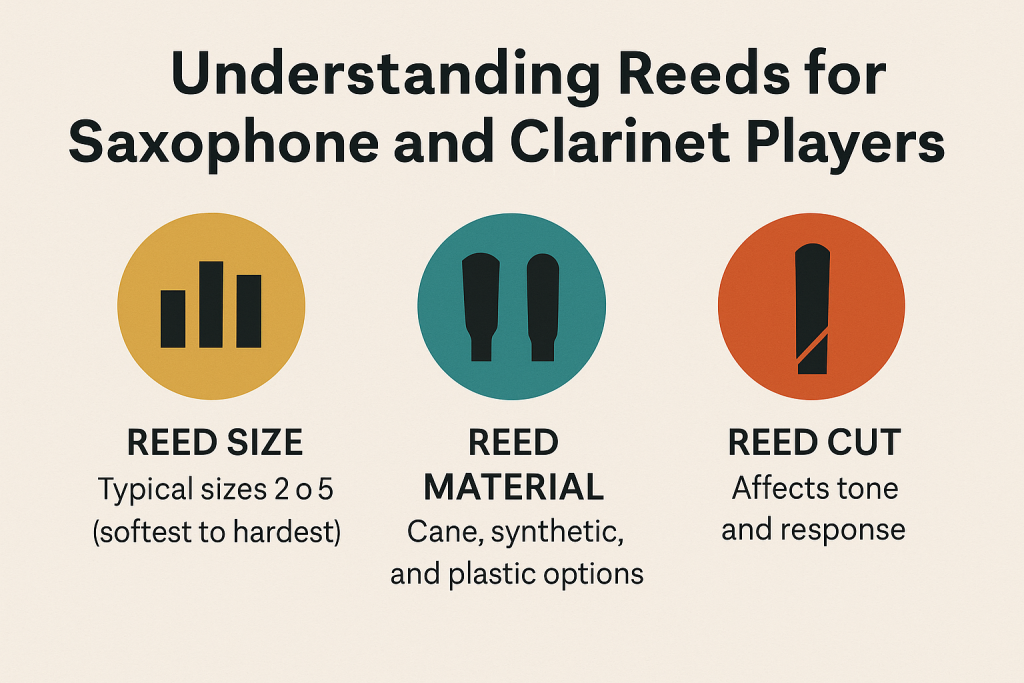
Understanding Reeds for Saxophone and Clarinet Players
A Guide to Reed Size, Material, and Cut
For saxophonists and clarinetists, the reed is one of the most essential components of the instrument. Without it, these woodwinds wouldn’t produce sound at all—or at least not the kind of sound players expect. While often overlooked by beginners, the reed significantly affects tone, response, and ease of play.
There are many manufacturers producing reeds today, offering a variety of cuts, materials, and strengths. Understanding the main differences can help players find the reed that works best for their individual needs.
Reed Size (Thickness)
Reeds are typically available in sizes ranging from 2 to 5, with 2 being the thinnest and 5 the thickest. A thinner reed is generally easier to play and produces sound more quickly, while thicker reeds tend to offer greater tonal depth but require more air support and embouchure control.
There’s a common belief that advanced players should automatically graduate to thicker reeds—but this isn’t always the case. Many professional players prefer sizes 2.5 to 3.5, depending on their mouthpiece setup and personal playing style. Comfort and response matter more than reaching an arbitrary reed strength.
Reed Material
Most reeds are made from natural cane, but synthetic and plastic reeds have become more popular in recent years. Synthetic reeds last longer and are more resistant to environmental changes, making them a great option for practice or performance in variable conditions. They tend to feel slightly harder than cane, so some players opt for a half-size lower than their usual cane reed.
While cane reeds remain the preferred choice for many, synthetic options are practical and reliable, especially for marching band or frequent travel.
Reed Cut
Reed cut refers to how the reed is shaped and shaved during manufacturing. This influences how the reed vibrates, which in turn affects tone, articulation, and responsiveness. Cuts vary by brand and model, and exploring different options is key to finding what suits your playing best.
Final Thoughts
Most advanced players use a combination of different brands, cuts, and materials based on the musical setting. It’s common to use one reed for classical ensemble work and another for jazz, or to keep synthetic reeds as long-lasting practice tools.
If you’re unsure which reed is right for you, consult your band director or private teacher. They can offer valuable insight based on your instrument, mouthpiece, and experience level.
Links
Brighton Music Academy: https://www.brightonmusicacademy.com/
Canton Music Academy: https://www.cantonmusicacademy.com/
More About Reeds: https://www.yamaha.com/en/musical_instrument_guide/saxophone/mechanism/mechanism002.html#:~:text=The%20reed%20is%20made%20of,reeds%20are%20exactly%20the%20same.
Original Post: https://www.cantonmusicacademy.com/understanding-reeds-for-clarinets-and-saxophones/